Cuff Your Jeans Like a Grown Man
- Match cuff type to denim weight and shoe height; width lives between 1 and 2 inches for most outfits.
- If your inseam is 2+ inches long after cuffing, hem first; don’t solve bad lengths with giant cuffs.
- Single roll for lightweight denim and sneakers; double roll for midweight and boots; deep cuff only on heavy raw denim.
- Keep the visual line clean: show the full ankle or none at all; avoid half-moon bunching and sloppy stacking.
- If in doubt, skip the cuff with dressier shoes and darker washes; a hemmed no-break line looks sharper.
The quick answer: cuff widths, rolls, and rules
Here’s the short, workable way to cuff your jeans after 40: keep it clean, small, and intentional. Most men look best with a 1–1.5 inch cuff, rolled once or twice, sitting just above the shoe without bunching. Show the ankle fully with low shoes in warm weather or cover it completely with boots and socks in cooler months. Never leave a half-exposed, wrinkled flap.
- Light denim (8–11 oz): single roll, ~1 inch, great with low-profile sneakers or loafers.
- Midweight denim (12–14 oz): double roll, 1–1.25 inches each fold (final height ~1.5–2 inches), pairs with trainers, derbies, or casual boots.
- Heavy/raw denim (15–20 oz): deep cuff (2 inches) or single wide cuff once. Works with service boots, Chelseas, and substantial sneakers.
- Slim/straight legs: rolls stay put. Skinny legs pinch and look fussy; relaxed legs may need a pin at the side seam or a professional chainstitch hem.
Proportion guardrails:
- Target hem height: top of the shoe collar for sneakers/derbies; 0.5–1 inch above Chelsea/lace-up boot shafts to keep a clean break; 0.25–0.5 inch above loafers if sockless, or kiss the vamp with dress socks.
- Width sanity check: your cuff should be narrower than your shoe sole is tall. If your sole is 1.25 inches, your cuff at 1 inch looks balanced; a 2.5-inch cuff does not.
- Two rolls max for everyday outfits. More than two reads like you’re fighting your inseam.
Cuff styles that work (and when to use each)
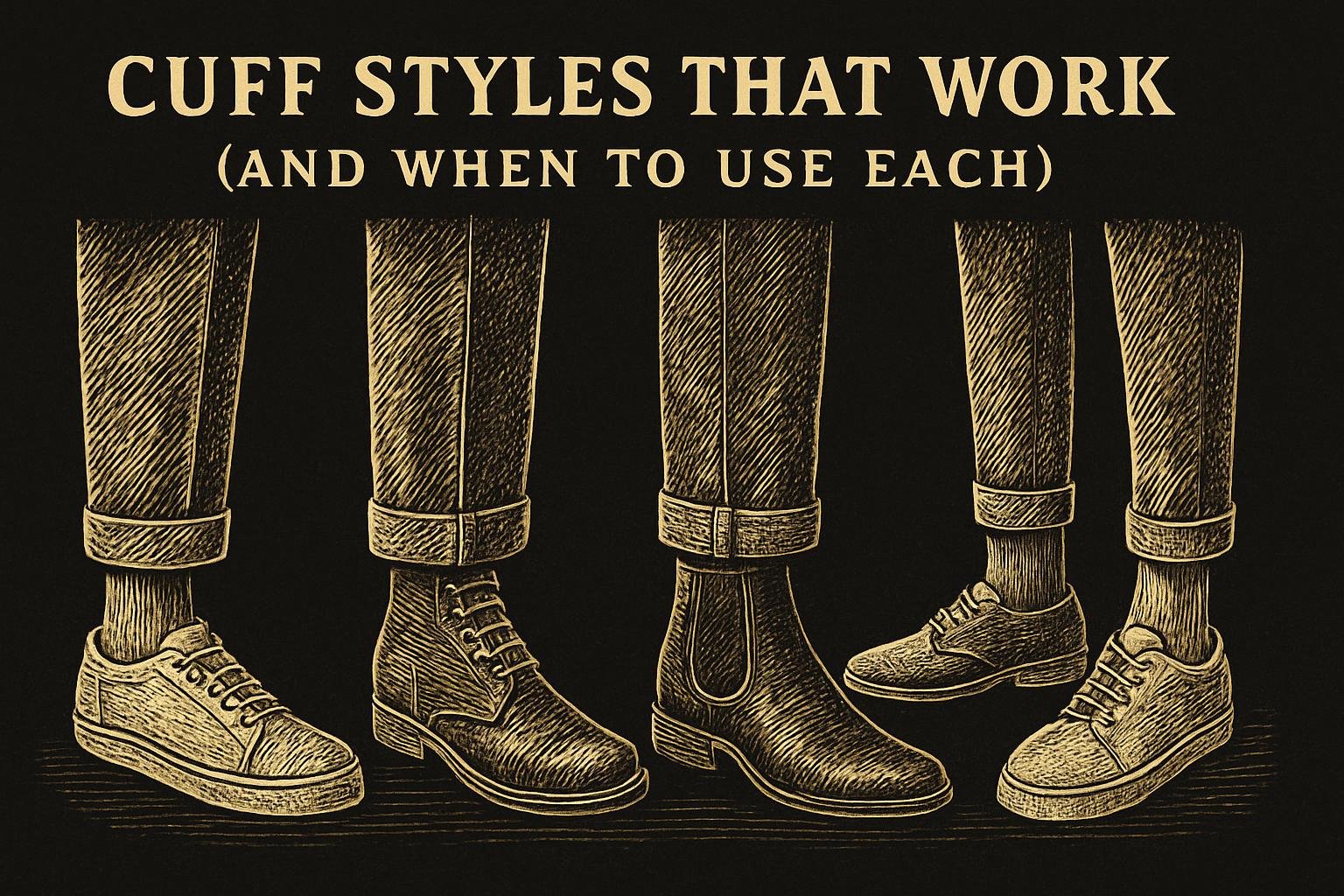
1) Single Roll (clean and easy)
How: Turn the hem up once, 1 inch. Press the crease with your thumb. Smooth the side seams so they stack flat.
Use it with: lightweight to midweight denim (8–13 oz). Low-top sneakers, loafers, or derbies. Looks intentional, not loud.
Avoid: super-stretchy skinny denim—fabric bounces back and looks wrinkled.
2) Double Roll (balanced and secure)
How: Turn 0.75–1 inch, then again the same amount. Final cuff height ~1.5–2 inches. Align side seams.
Use it with: midweight denim (12–14 oz). Casual boots, chunkier sneakers, field or work-style shoes.
Avoid: trousers with excessive taper below the calf—double folds can grip and balloon.
3) Deep Cuff (heritage, only on sturdy denim)
How: One turn of 2 inches. Keep it even all around.
Use it with: heavy/raw denim (15–20 oz). Substantial boots (service, moc-toe, Chelsea) and vintage-leaning sneakers.
Avoid: light, drapey jeans—deep cuffs collapse and look sloppy.
4) Pinroll (rare, use sparingly)
How: Pinch the side seam in 0.5 inch, fold it back toward your heel, then roll once over it at ~1 inch. Locks the opening narrower.
Use it with: tapered jeans that are slightly wide at the opening. Minimal sneakers. Urban casual only.
Avoid: boots, dressy shoes, and thick denim—it puckers.
5) No Cuff (hemmed and clean)
How: Tailor to a no-break or slight-break length. No rolling, just a crisp line.
Use it with: darker washes, dressier shoes (loafers, oxfords), and smart-casual settings.
Avoid: trying to fake a no-break with a micro-cuff. If you want clean, hem it.
Get the length right: inseam, rise, and taper
You can’t cuff your way out of a bad inseam. Fix the length first, then decide whether to roll.
- Measure your working inseam: Put on your favorite shoes and stand straight. Mark where you want the hem to land. Measure that from crotch seam to mark. That number (not the tag) is your baseline.
- Targets by shoe (post-hem, uncuffed):
- Loafers/derbies: no-break to 0.25 inch break. Inseam often 28–30 inches for average heights.
- Low sneakers: kiss the top of the collar or float 0.25–0.5 inch above. Inseam ~28.5–30.5 inches.
- Chelsea/lace-up boots: hem to 0.5–1 inch above the shaft. Inseam ~28–30 inches, shorter if you prefer no stack.
- How much extra for cuffing: Add 1–2 inches to your hem target if you plan a consistent cuff. One 1-inch cuff needs ~2 inches of fabric (fold consumes length). Two smaller rolls need ~3–3.5 inches total.
- Rise matters: A medium rise (about 10–11.5 inches front rise on most brands) keeps your torso-to-leg ratio balanced. Low rise shortens the leg visually; if you cuff on top of that, you compress your frame. Mid or higher rise gives you room to cuff without stumping the silhouette.
- Taper check: Hem opening between 6.5–8 inches (flat, doubled) plays well with 1–2 inch cuffs. If your opening is narrower, stick to a single roll or no cuff to avoid ballooning calves.
If your current jeans miss these marks, start with the right base. See our guide to picking silhouettes and washes in the best jeans for men over 40.
Pro move: ask your tailor for a chainstitch hem on heavier denim. It preserves the classic roping at the edge so a single or deep cuff still looks authentic when you drop it later.
Where Suvant helps: upload three photos to the audit and you’ll see exactly which category is off—fit, body proportions, or style—and get a tailored inseam target as a quest deliverable. The audit is free at app.getsuvant.com, and the full plan turns those notes into step-by-step checklists you can hand your tailor.
Match cuffs to shoes (so your line stays clean)
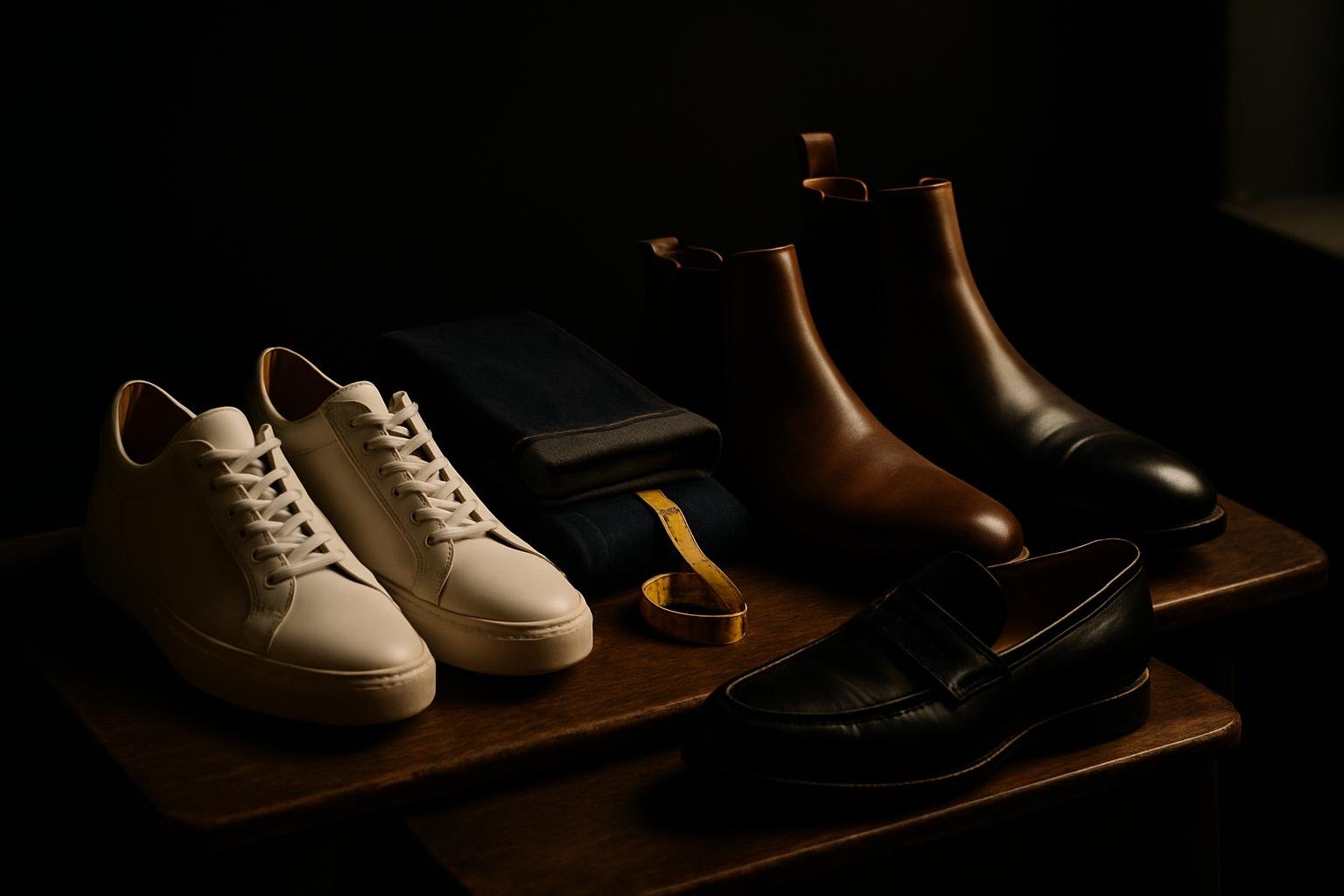
Shoes decide how high the hem sits and how bold the cuff reads. Use these pairings and you won’t overthink it.
- Minimal sneakers (thin sole, low collar): single 1 inch roll, or double 0.75 inch if your inseam is long. Show the full ankle or cover it fully with a clean sock; avoid the half-exposed wrinkle.
- Chunky sneakers/trainers: double roll to 1.5–2 inches total height. Balance the visual weight of the shoe. Keep socks solid and high enough to close the gap.
- Loafers: single 0.75–1 inch roll or no cuff. If sockless, hem 0.25–0.5 inch above the vamp. If wearing dress socks, aim for no break with no cuff.
- Derbies/Bluchers: single or double roll depending on denim weight; keep the final line at the top of the quarters. For dress-leaning outfits, skip the cuff and hem clean.
- Chelsea/service/work boots: deep cuff only with heavy denim. Otherwise a tidy double roll, ending 0.5–1 inch above the shaft to avoid bunching.
- High-tops: either tuck the cuff to sit just above the collar or skip cuffs and hem to kiss the top. Don’t let the roll fight the collar padding.
Sock rules so the cuff doesn’t steal the show:
- With low sneakers and cuffs: plain crew socks, same value as the jeans (navy/charcoal with dark denim, heather grey with light). No novelty prints near the cuff line.
- With boots: boot socks fill the space; avoid peeking skin. If your cuff shows a sliver, your sock was too short.
- With loafers: either no-show socks and a clean ankle or true dress socks that fully cover when seated.
Dialing in shoe-and-cuff combos unlocks a lot of outfits. For ideas that run smarter than weekend casual, check smart casual outfits for men over 40.
When not to cuff (and common mistakes)
Cuffs aren’t a religion. Sometimes the sharper move is no cuff and a proper hem.
- Dress-leaning fits: dark rinse denim, loafers or sleek derbies, tucked shirt, jacket—skip the cuff. Get a clean no-break hem.
- Super-stretch light denim: thin knits don’t hold a crease. They wrinkle and creep down. Hem or leave a single micro-roll at most.
- Excess length: if you need more than two rolls to clear the floor, your inseam is wrong. Hem first, then cuff small.
- Skinny calf squeeze: on tight tapers, rolls balloon and look pinched. Keep it to a single narrow roll or none.
- Wide, floppy cuffs: a 3–4 inch turn on soft denim collapses. Deep cuffs are for heavy/raw only.
Fix these and your jeans stop fighting your shoes. For other easy wins, see our list of avoidable errors in men’s style mistakes over 40.
Fast checks before you head out:
- Walk test: take 20 steps. If the cuff unrolls or catches the heel, re-fold tighter or reduce one roll.
- Sit test: sit down and cross a leg. If your sock dips and skin flashes between cuff and shoe, go up one sock length or drop the cuff.
- Mirror test: the cuff should read like a line, not a lump. If it looks thicker at the side seam, pull and flatten there.
Step-by-step cuffing at home (two minutes, no fuss)
- Put on shoes you plan to wear. Cuffs without shoes lie.
- Set your line: grab the hem and lift until it clears the shoe the right amount (see targets above). Pinch and note how much fabric you moved.
- First fold: turn up 0.75–1 inch. Start at the back seam, then match the front seam, then smooth the sides.
- Second fold (optional): match the same height again for a tidy double.
- Compress: run your thumb and forefinger around the cuff to press it flat. A quick steam pass helps it hold.
- Symmetry check: set both cuffs on a table. Measure height with a ruler or your thumb width so they match within 1/8 inch.
- Lock it (heavy days only): tiny safety pin inside the side seam or a fabric clip for the commute. Remove at the door.
Maintenance and care:
- Wash impact: machine washing can soften creases. Re-press after drying. If you air-dry, reshape the cuffs damp and let them set.
- Raw denim note: if you’re breaking in heavy raw, expect some stiffness. A deep 2-inch cuff will hold. Don’t overwork it—creases will relax with wear.
- Travel tip: pack jeans flat with cuffs pre-set; place shoes on either side to keep pressure on the fold.
If you want a second set of eyes on proportions before you snip or roll, Suvant’s image audit gives you a straight read on fit, cuff size, and shoe balance, then turns that into a checklist you can carry into the tailor or your closet. It’s at app.getsuvant.com with a money-back guarantee on the full plan.
Get the honest audit you've never gotten.
Three photos, eight scores, the real reasons behind each number, then a ranked plan to fix them one move at a time.
Get my free audit →