Body Hair Trimmers That Don’t Bite Back After 40
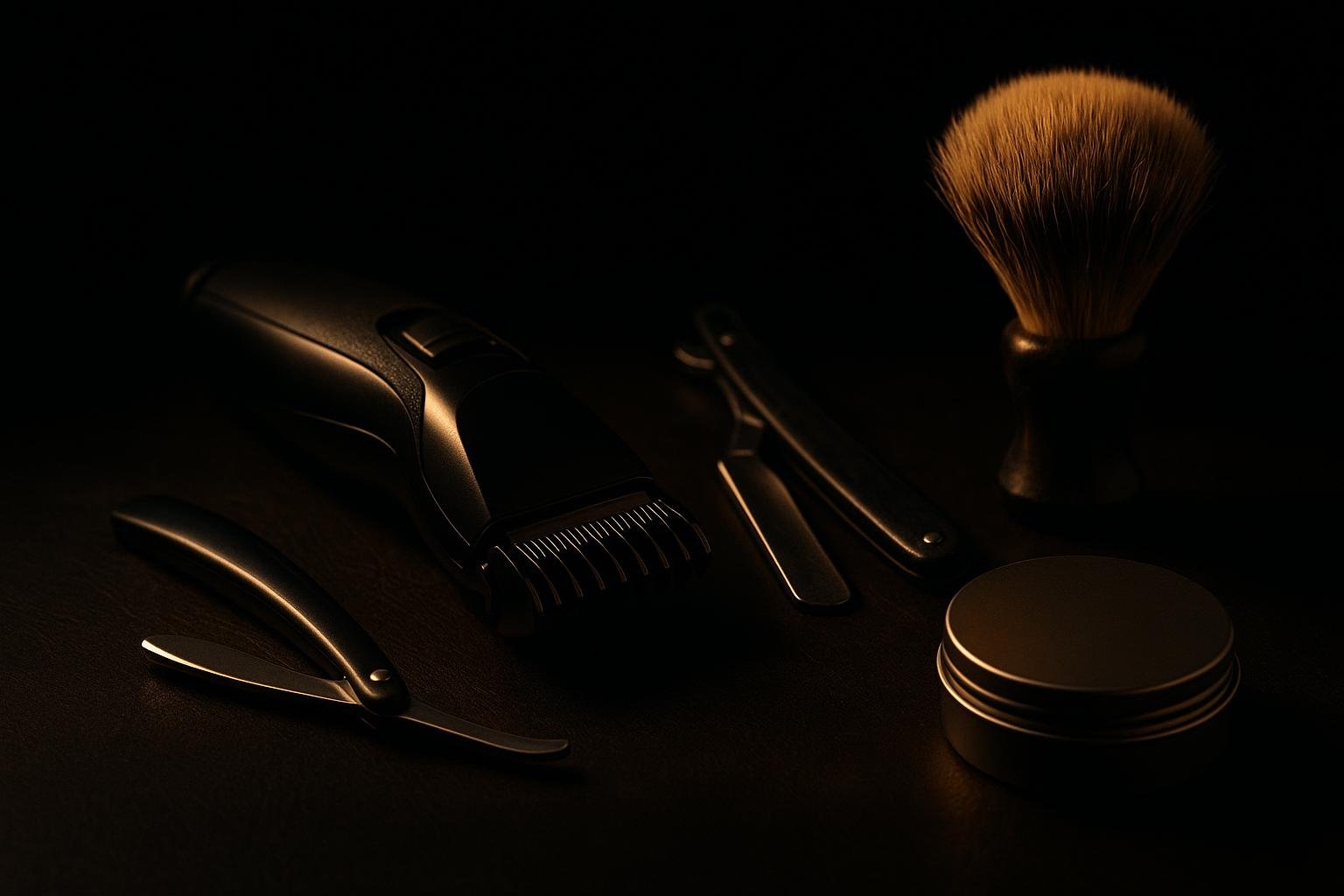
- Look for a body trimmer with 0.8–12 mm guards, rounded teeth, and a skin guard head if you’ll use it on the groin.
- For the shower, choose IPX7 waterproofing; for speed, pick 5,000–6,500 RPM motors and 60–90 minute batteries.
- Use longer guards (5–7 mm) on chest, 3–4 mm on stomach and armpits, and 2–3 mm on groin with slow, flat passes.
- Clean after every use, oil metal blades monthly, replace foils or ceramic blades every 6–12 months.
- Trim what shows and what tangles; leave natural where hair is fine and flat—aim for even density, not bare skin.
Quick answer: the right trimmer for men over 40
You want three things from a body trimmer at this stage: safety on sensitive zones, enough guard range to manage density (not shave bare), and a battery that doesn’t die halfway through your back. Here’s the fast spec checklist—buy the trimmer that hits most of these:
- Guards: A true 0.8–12 mm range. Must include 2–3 mm for groin, 3–5 mm for armpits and stomach, 5–7 mm for chest. Bonus: a skin guard head for very sensitive areas.
- Blade & teeth: Rounded tooth edges, hypoallergenic steel or ceramic moving blade, and a floating or spring-mounted guard that rides flat.
- Safety: No exposed corners; a separate foil or skin-guard cap for tight zones. Minimal gap between blade and guard.
- Wet/dry: IPX7 rated if you want to trim in the shower. If you only dry-trim, splash resistance (IPX5/IPX6) is fine.
- Battery & motor: 60–90 minutes on a full charge. Motor in the 5,000–6,500 RPM range for thick chest/back hair without tugging.
- Back reach: If you have back hair, get an optional extension arm or a separate long-handle attachment.
- Maintenance: Snap-off head for rinsing, available replacement blades, and a cleaning brush in the box.
By zone, choose this:
- Chest & stomach: Trimmer with 5–7 mm guard and a strong motor. You’re reducing bulk, not shaving.
- Back: Same trimmer with 5–7 mm guard plus an extension handle. If you can’t reach, use a handled body groomer.
- Groin: Trimmer that has rounded teeth, a 2–3 mm guard, and a skin guard cap. Slow, flat passes only.
If you don’t want to guess, Suvant’s image audit can flag your high-impact zones and hand you exact guard lengths in a checklist. The audit is free and takes about two minutes at app.getsuvant.com.
Guard lengths: what to buy and when to use
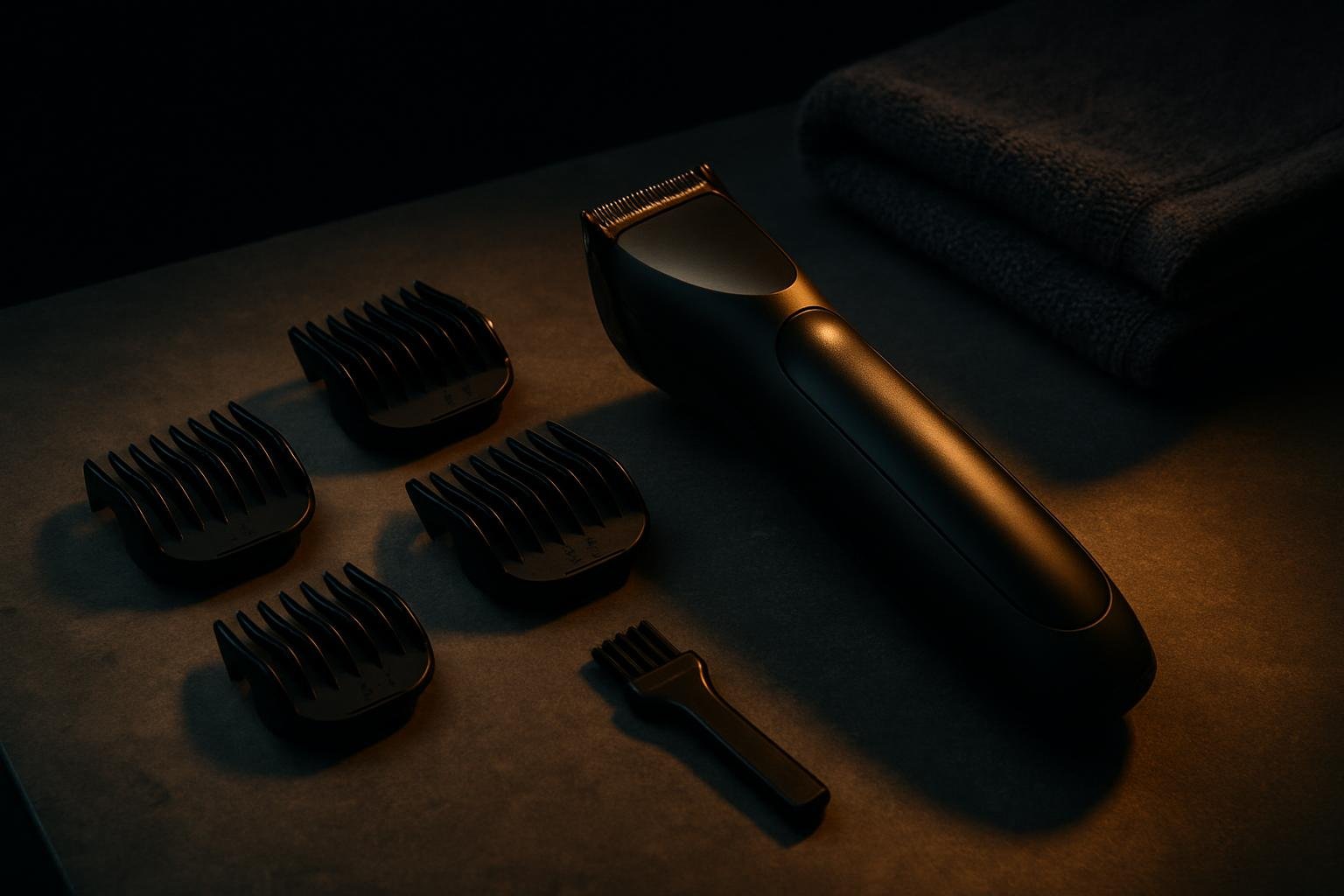
Guards matter more than marketing. You’re not carving a fade; you’re controlling density. Here’s how to match length to area and hair type:
Essential guard kit
- 2–3 mm: Groin outline, upper inner thigh, and the first clean-up pass on a dense treasure trail before blending longer.
- 3–4 mm: Armpits and lower stomach for a neat, athletic look without stubble feel.
- 5–7 mm: Chest and back for even coverage that reads “groomed” without shiny skin.
- 9–12 mm: For very thick chest/back hair if 7 mm still looks patchy; also good for softening a sharp transition at the collarbone or shoulders.
How to pick your starting length
- Fine, flat hair: Start at 5 mm. If skin still shows too much, bump to 7 mm.
- Medium, wavy hair: Start at 4–5 mm on chest, 3–4 mm in pits and stomach stripe, 5–7 mm on back.
- Coarse, curly hair: Start at 7–9 mm to avoid chew-toy texture. Drop one size only if you need more definition.
Blend points that make the difference
- Collarbone and shoulder caps: One guard longer than the chest to avoid a hard edge showing in T-shirts.
- Stomach to groin: Step down 1–2 mm as you move south so it looks intentional, not like a racing stripe.
- Armpit perimeter: 1 mm longer than the center to diffuse the border.
Buy a trimmer that includes at least four guards in this range or an adjustable comb that clicks from 2 to 12 mm in 0.5–1 mm steps. If you only get two guards, you’ll either look patchy or over-trim.
Safety by zone: no nicks, no drama
Body hair grooming at 40+ is about control, not heroics. Use the right head, the right guard, and slow passes. Here’s the playbook:
Groin
- Guard: 2–3 mm. If your trimmer came with a skin guard or sensitive head, use it here.
- Skin prep: Dry skin, clean area. If you trim in the shower, do it at the end when hair is hydrated but skin isn’t pruned.
- Technique: Stretch skin gently with your non-trimming hand. Keep the guard flat to the surface. Move with hair growth first, then lightly across if needed. Short strokes, no pressure.
Chest
- Guard: 5–7 mm (longer for coarse hair).
- Technique: Work in 4–6 inch lanes from center out. Roll your shoulders back to flatten pecs. Lift the guard away before changing direction to avoid lines.
Stomach
- Guard: 3–4 mm on the stripe, 4–5 mm above the navel, 2–3 mm blending into the groin.
- Technique: Sit or stand tall to keep skin taut. Work downward; avoid digging into the navel—use the corner of the guard lightly around it.
Armpits
- Guard: 3–4 mm center, 4–5 mm on the outer halo.
- Technique: Arm fully overhead to stretch skin. One slow pass with growth, one light pass against. Wipe and check from the side mirror.
Back
- Guard: 5–7 mm.
- Technique: Use a long-handle attachment. Work top-down so clippings fall away. If you can’t reach lower back cleanly, ask a trusted friend to finish the last 10%—give them the guard setup.
Any persistent irritation means either your guard is too short for your hair texture or you’re pressing too hard. Lengthen 1–2 mm and slow down.
Wet/dry, battery, and power: what actually matters
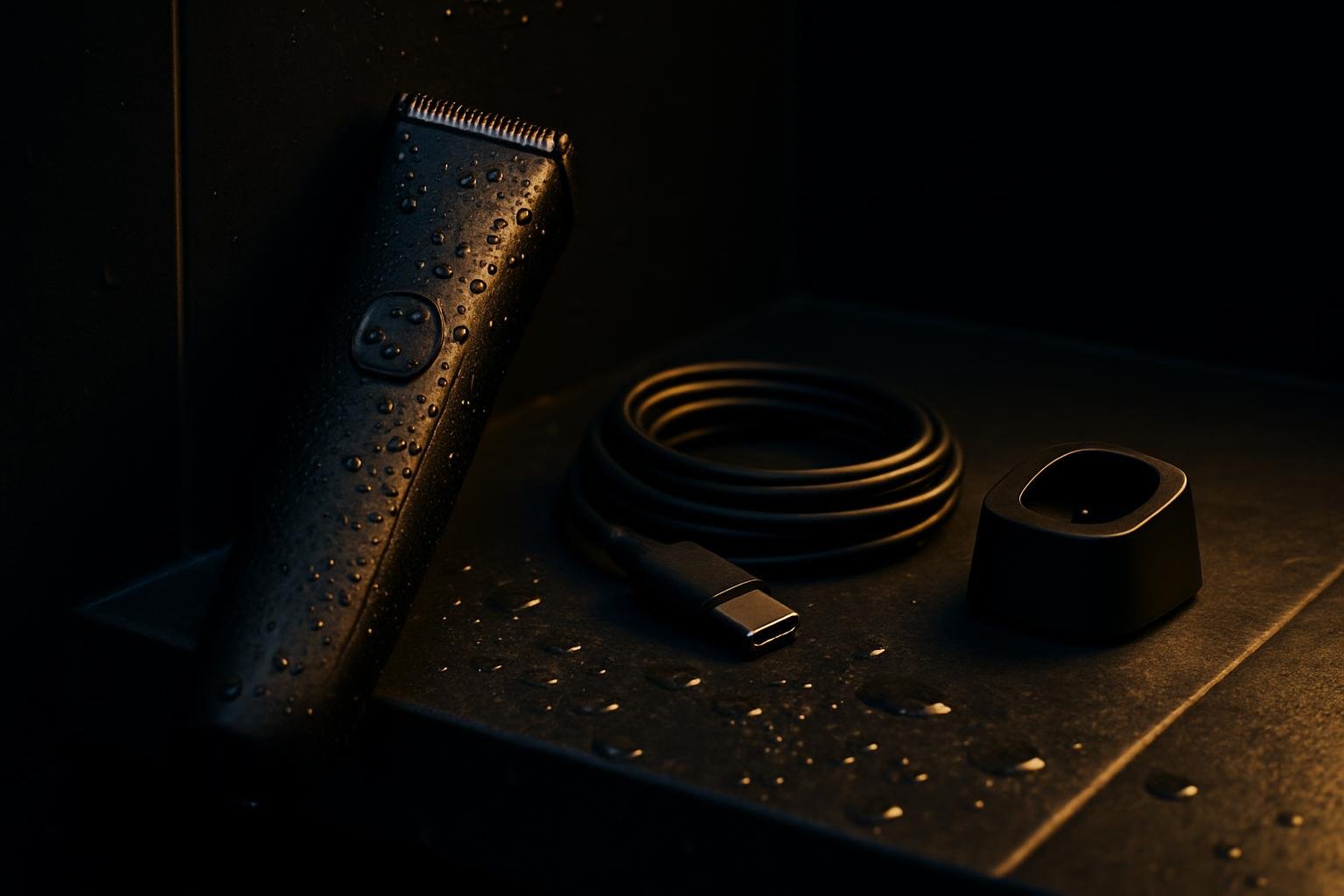
Marketing throws buzzwords. You just need the right ratings for how you groom and how much hair you’re moving.
Wet vs. dry
- IPX7 waterproof: Safe for shower trimming and full rinsing under water. Ideal if you prefer trimming at the end of a hot shower when hair is softer.
- IPX5–IPX6 splash-resistant: Fine for sink rinsing and steamy bathrooms, but keep it out of the shower stream.
- Real-world tip: Wet hair collapses and looks shorter; always finish with a quick dry check to catch missed bulk.
Battery life
- Target: 60–90 minutes per charge. Chest + stomach + pits takes ~12–20 minutes. Add 10–15 for back with a handle.
- Charging: USB-C is easiest to replace; a simple stand is nice but optional. Quick charge (5–10 minutes for a top-up) is useful for pit stops.
Motor power
- Spec: 5,000–6,500 RPM handles dense chest/back without snagging. Below that, you’ll need slower passes. Above that, it’s louder without much payoff for body hair.
- Blade material: Ceramic runs cooler; steel is durable and easy to oil. Either works if the teeth are rounded.
Noise and vibration
- Why it matters: Less vibration means steadier contact, which means fewer tracks and fewer pinches in sensitive areas.
If you’re unsure which spec mix matches your body hair, run a quick audit with Suvant and you’ll get a ranked gear list based on your photos and goals, plus the exact guard plan to hand yourself before you start.
Technique and routine: a 30-minute body plan
Here’s a practical routine you can put on your calendar. It keeps you even, fast, and nick-free.
Every 2 weeks (20–30 minutes)
- Shower first (optional): Warm water loosens hair. Pat dry if you’re not using an IPX7 trimmer.
- Chest (5–7 mm): 6–8 vertical passes from midline outward. Check in mirror with shoulders relaxed and rolled back.
- Stomach (3–4 mm center, 4–5 mm upper): Work top-down; glide over navel lightly. Step down to 2–3 mm as you blend into the groin.
- Armpits (3–4 mm center): One pass with growth, one against. Wipe with a damp cloth between passes to stand hairs back up.
- Groin (2–3 mm with skin guard): Sit or stand. Free hand keeps skin taut; trimmer hand uses short, flat strokes. Stop if you feel heat or pull.
- Back (5–7 mm): Attach handle. Start at the neck and go down in overlapping lanes. Quick phone photo check of shoulder blades to confirm symmetry.
Every week (8–12 minutes)
- Quick tidy: One pass on chest centerline and around the neckline, a light sweep in pits, and groin edge cleanup.
- Shirt check: Put on your usual T-shirt and polo. If hair pokes out the collar or sleeves, do a 30-second blend with a longer guard.
Seasonal tweak
- Summer: Go one guard shorter on chest and stomach for cleaner lines in open collars.
- Winter: Go one guard longer to avoid stubble feel under layers.
Pair this with light facial detail: keep nose and ear hair in check weekly—our guide on that is here: nose and ear hair maintenance. If you wear a beard, shape it to match your neckline and chest density: see beard styles for older men.
Maintenance: clean, sharp, and ready
Good maintenance is safety. A clean, sharp trimmer glides; a dirty, dull one tugs.
After every use (3 minutes)
- Power off and pop off the head. Tap out clippings; use the included brush to clear the teeth and the guard.
- Rinse if waterproof. Shake off water and pat dry. Air-dry with the head off for 15 minutes.
- Charge to 50–80%. Don’t leave it at 0% for months; lithium cells prefer mid-charge storage.
Monthly
- Oil metal blades: One tiny drop on each end of the teeth. Run the trimmer 10 seconds to distribute. Wipe excess.
- Inspect guards: If a tooth is warped or cracked, replace it. Damaged guards cause tracks and pinches.
Every 6–12 months
- Replace blades/foil: Ceramic and steel both dull. If you feel tugging despite clean technique, it’s time.
- Deep clean: Soak guards in warm soapy water for 10 minutes, rinse, and dry fully.
Storage
- Dry, ventilated shelf: Not sealed in a damp bag. Keep guards together in a small tray so you don’t lose sizes.
If you want an easy checklist that pings you when it’s time to replace a blade or run a deep clean, Suvant’s plan mode turns your routine into quests with reminders you can actually complete.
What to trim—and what to leave natural
The goal isn’t hairlessness. It’s intentional edges and even density. Trim what shows, what tangles, and what traps sweat. Leave what lays flat and doesn’t call attention to itself.
Usually trim
- Armpit center: 3–4 mm keeps deodorant off hair and reduces clumping.
- Chest centerline: 5–6 mm for balance under open collars.
- Stomach stripe: 3–4 mm looks cleaner in swimwear.
- Groin outline: 2–3 mm for comfort and hygiene; don’t chase bare skin unless you prefer it.
- Back of shoulders/upper back: 5–7 mm to avoid hair peeking out of tees and polos.
Often leave natural
- Outer chest/pec edges: If hair is fine and flat, keep it one guard longer than center to avoid a “helmet” look.
- Forearms and calves: Unless hair is extremely dense, leave alone. If you do trim, use 7–9 mm only.
- Happy trail beyond the waistband: A subtle taper (4 mm down to 3 mm) is enough; don’t erase it if it suits your frame.
Photo proof check
- Take a well-lit mirror photo front and back after trimming. Look for hard edges at the collarbone, shoulders, and groin line. If you can spot the line, blend one guard longer.
Dial in your head hair, too—flyaways can make a clean chest still read sloppy. A five-minute tidy helps: see our guide on taming flyaway hair.
Get the honest audit you've never gotten.
Three photos, eight scores, the real reasons behind each number, then a ranked plan to fix them one move at a time.
Get my free audit →